
The Reverend Dr. Frederick W. Schmidt, Jr. had a great article on Patheos this past Monday about seminary education entitled “Is It Time to Write the Eulogy?: The Future of Seminary Education.” The future of traditional mainline seminary education, as we have known it since its incarnation in the United States, is something that many are beginning to critique and rethink. Of course, most of the folks rethinking it are outside of the seminary context, and many within think things are just fine.
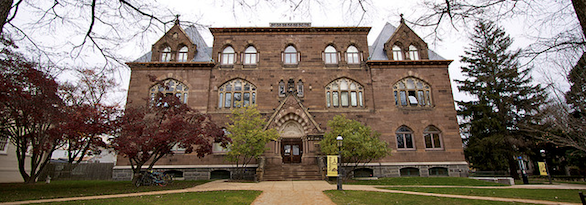
I studied at both Princeton Theological Seminary and Columbia Theological Seminary. The schools couldn’t have been more different. The joke at Princeton was that everyone was “pursuing their PhD” and if that didn’t work out, they’d be pastors. There was always a competitive spirit and the focus was primarily on academics and performing exceedingly well. We were grooming PhDs and pastors of traditional, east coast mainline churches. Being at a school like Columbia was incredibly different; the goal there was training pastors and that’s what they did. The academics were still excellent, but we were on first-name basis with all the professors, you could grab Brueggemann as he ran across campus in his Birkenstocks and have conversations with him, and the president (Laura Mendenhall during my time) was accessible, very easy to talk with, and cared about her students in visible ways.
But I’d say that both schools are primarily training pastors for churches that doesn’t exist anymore.
Or at least churches that don’t have a long shelf life anymore. And that’s what they told us at Princeton. I heard it over and over again during my time there. They would contact alumni who had been out serving churches for five years and ask them what they wish they would have been taught during their time at Princeton, and the overwhelming response was something to the effect of “You prepared me for a church that existed in the 1950s. I was not prepared for the church of today.”
And even though I heard that over and over again – there was no follow up conversation about what the school planned on doing about it. It was a commonly told anecdote…we’d laugh a bit about it, say “Well, that sucks…” and then it was back to the syllabi that had little meaning out in the “real world” of ministry we were being prepared for.
Schmidt also has a critique of many faculty at seminaries: “Seminary faculty often lack any real affinity for the church.” I’ve seen this before and heard of  professors teaching practical theology courses who didn’t really have a lot of practical ministry experience themselves, but were esteemed academicians in the field. Schmidt believes that the very basic core curricula that seminaries require don’t even cover the most basic necessities for the field of ministry:
Faculty have also indulged their academic interests, creating both classes and curricula that correspond with their research issues and academic agenda but don’t necessarily speak to the basic and perennial needs of the church’s ordained ministry.
This could very easily lead into a discussion of the nature of the field of practical theology as a whole, and the ways in which we’ve seemed to segmented the “practical” skills to one department, and required just a handful of those classes, and perhaps put more emphasis on the metaphysical and hypothetical questions and subjects within the curriculum. This makes us feel smart to be able to debate heady theological concepts, but what role does that actually play in preparing us to minister to and serve the church?
The article goes on to discuss issues related to ordination, the huge cost of a seminary education and the lack of support from both seminaries and the Church as a whole to help students with the costs and the impending debt graduates will have. In the end, Schmidt outlines his hopes and dreams for the seminary education experience and process, although he acknowledges that many will immediately claim its impracticality.
With seminaries closing, laying off professors, cutting courses and so many in dire financial situations, it’s clear that something isn’t working. Alternatives and new approaches must be thought of, both by those outside the seminary context, but especially by those within the seminaries themselves. Just because you have tenure at a large mainline seminary, doesn’t mean you can keep teaching and running your classes the same way you and your predecessors always have. Our world is changing, and so should our seminary education. Or we will have to write a eulogy for it after all…?